

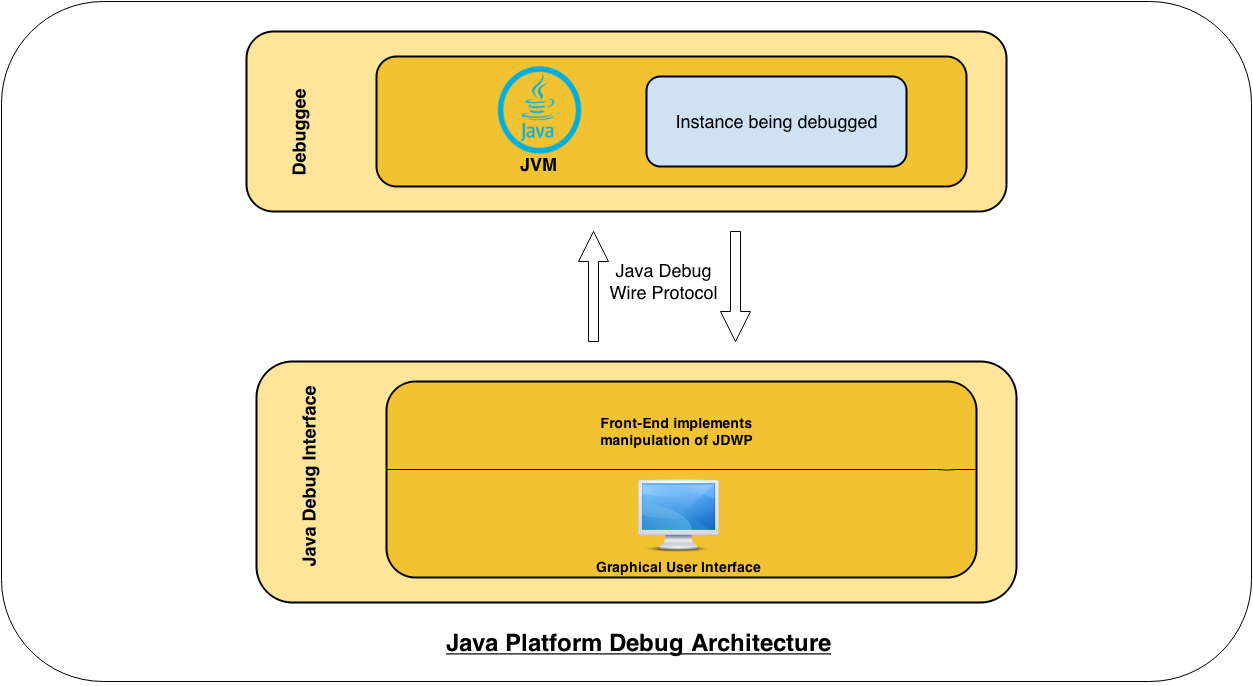
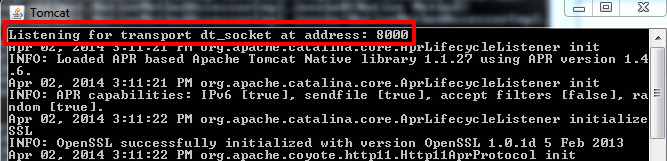
- It is a packet-based network binary protocol.
- It is mostly synchronous. The debugger sends a command over JDWP and expects to receive a reply. However, some commands, like Events, do not expect a synchronous response. They will send a reply when specific conditions are met. For example, a BreakPoint is an Event.
- It does not use authentication.
- It does not use encryption.
An experienced security auditor may have already realised that such a simple handshake offers a way to easily uncover live JDWP services on the Internet. Just send one simple probe and check for the specific response.
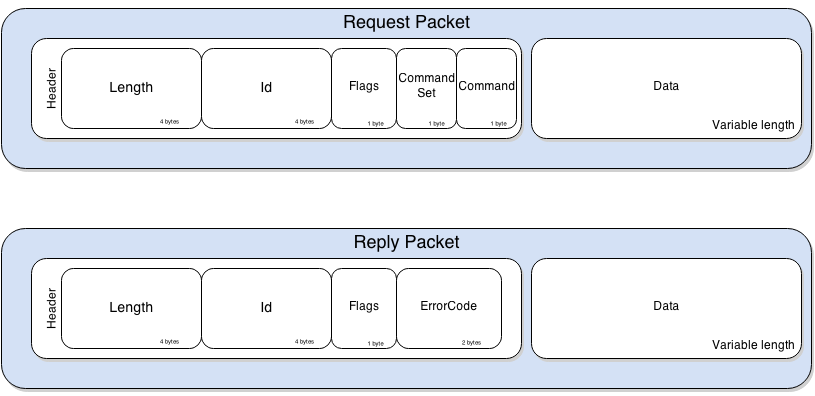
- VirtualMachine/IDSizes defines the size of the data structures handled by the JVM. This is one of the reasons why the nmap script jdwp-exec.nse[11] does not work, since the script uses hardcoded sizes.
- ClassType/InvokeMethod allows you to invoke a static function.
- ObjectReference/InvokeMethod allows you to invoke a function from an instantiated object in the JVM.
- StackFrame/(Get|Set)Values provides pushing/popping capabilities from threads stack.
- Event/Composite forces the JVM to react to specific behaviors declared by this command. This command is a major key for debugging purposes as it allows, among many other things, setting breakpoints, single-stepping through the threads during runtime, and being notified when accessing/modifying values in the exact same manner as GDB or WinDBG.
- VirtualMachine/CreateString allows you to transform a string into a java.lang.String living in the JVM runtime.
- VirtualMachine/RedefineClasses allows you to install new class definitions.



- “Default” mode is totally non intrusive and simply executes Java code to get local system information (perfect for a PoC to a client).
- Passing the “cmd” option executes a system command on the remote host and is therefore more intrusive. The command is done with the privileges the JVM is running with.
- Oracle Java JDK 1.6 and 1.7
- OpenJDK 1.6
- IBM JDK 1.6
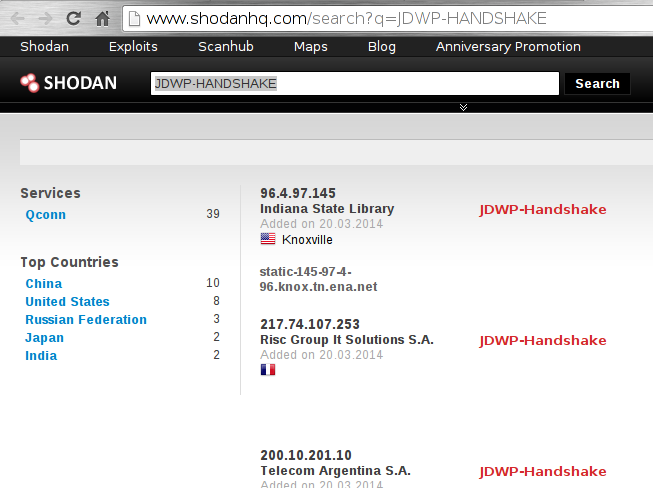
- At the time of writing this article, a quick search on ShodanHQ[4] immediately reveals about 40 servers sending the JDWP handshake:
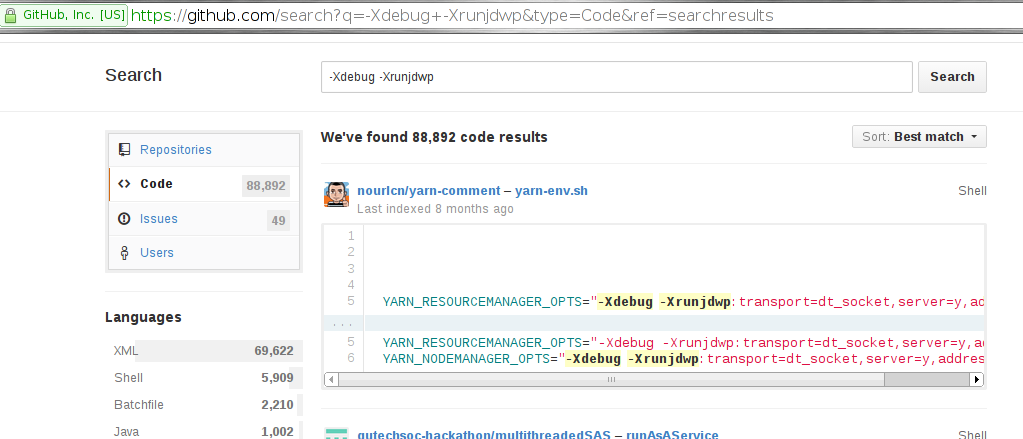
- GitHub[7] also reveals a significant number of potentially vulnerable open-source applications:
- masscan-ing the Internet looking for specific ports (tcp/8000, tcp/8080, tcp/8787, tcp/5005) revealed many hosts (which cannot be reported here) responding to the initial handshake.
- “Enterprise” applications were found in the wild running a JDWP service *by default* (finding the actual port number is left as an exercise to the curious reader).
- https://github.com/IOActive/jdwp-shellifier
- http://docs.oracle.com/javase/7/docs/technotes/guides/jpda/architecture.html
- http://www.secdev.org/projects/scapy(no longer active)
- http://www.shodanhq.com/search?q=JDWP-HANDSHAKE
- http://www.hsc-news.com/archives/2013/000109.html (no longer active)
- http://packetstormsecurity.com/files/download/122525/JDWP-exploitation.txt
- https://github.com/search?q=-Xdebug+-Xrunjdwp&type=Code&ref=searchresults
- http://docs.oracle.com/javase/6/docs/api/java/lang/Runtime.html
- http://docs.oracle.com/javase/1.5.0/docs/guide/jpda/jdwp-spec.html
- http://docs.oracle.com/javase/1.5.0/docs/guide/jpda/jdwp/jdwp-protocol.html
- http://nmap.org/nsedoc/scripts/jdwp-exec.html