

Everything is ‘Connected’ in Today’s Modern Airports
Cybersecurity in global aviation is increasingly dependent on vulnerabilities in Information Technology (IT) and Operational Technology (OT) systems. The definition of OT systems in this context is defined as hardware and software dedicated to detecting or causing changes in physical processes through direct monitoring and/or control of physical devices such as valves or pumps. OT systems are much less organized and are rarely monitored as closely as conventional IT networks. Airports use several critical OT systems, including baggage handling, airport refueling systems, runway lights, building management systems, and supervisory control and data acquisition systems (SCADA)/industrial control systems (ICS).
At most modern airports, there are many cyber-physical security (CPS) challenges to be met, and airport CPS systems fall into three broad categories, each managed by means of network-connected digital controllers:
- OT Systems – baggage handling systems, building management systems (mechanical, HVAC, electrical systems, lighting, alarms, and sensors), SCADA/ICS, airport refueling/SCADA systems, Approach Lighting System (ALS), Instrument Landing Systems (ILS), electronic baggage tags, etc.
- IT Systems – video security surveillance systems, access control/badging, contactless mobile payment systems, barcode systems, license readers/parking lots, etc.
- Ground Vehicles – de-icing trucks, Aircraft Rescue and Firefighting (ARFF) trucks, heavy-duty electric trucks, Electric Vehicle Supply Equipment (EVSE) chargers, snowplow trucks, remote-control airport tugs, Automotive People Movers (APM), Automated Guideway Transit (AGT), Personal Rapid Transit (PRT), automated shuttles, autonomous vehicles, etc.
Today’s Cybersecurity Threats at Airports is Increasing Exponentially
Persistent cybersecurity threats against the aviation sector pose a danger to world airport travel and safety, including unidentified malicious cyber actors who have specifically targeted the U.S. aviation sector over the past few years. Aviation entities have frequently reported incidents such as increased interactions with known malicious foreign IP addresses, phishing emails impersonating legitimate companies, brute-force attacks, and attempts to install backdoors on victim networks.
This accumulation of incidents, which include the following recent examples, underscores the ongoing threat to the aviation sector and the unacceptable risks associated with delay or inaction:
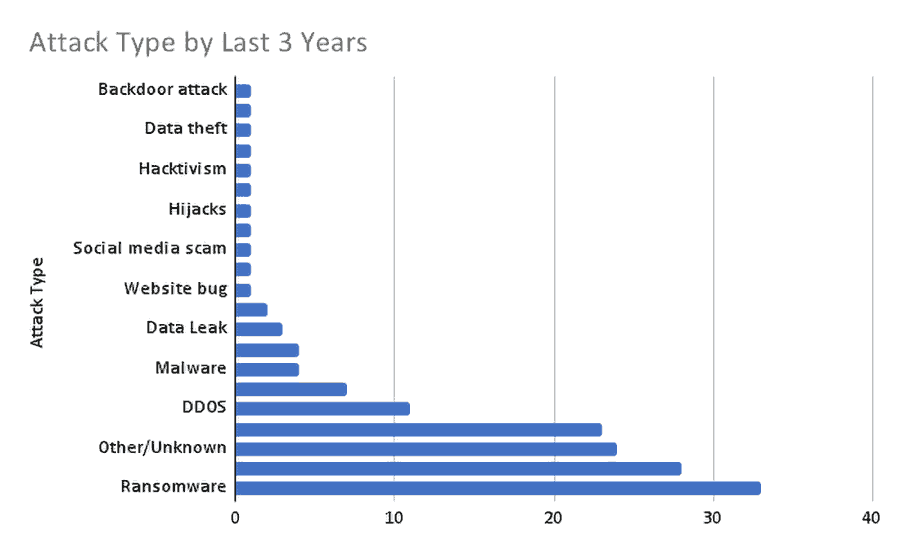
In a September 2022 article titled “Top Cyber Threats Faced by the Aviation Industry,” SOCRadar reported that the aviation industry faces a landscape of cyber threats that has constantly evolved and posed new challenges for airports and airlines. The article noted that airport websites across the country were the target of Distributed Denial-of-Service (DDoS) attacks last year that temporarily shut down access to several sites, while ransomware attacks and data breaches remained a majority of incidents impacting the industry since 2020.
In recent years, cyber incidents in the aviation industry have been reviewed within the context of events monitored by Eurocontrol, a pan-European, civil-military organization dedicated to supporting European aviation, who publish the EATM-CERT (European Air Traffic Management Computer Emergency Response Team) Aviation Cyber Event Map. The data in this map has led to the following findings: